|
|
| ALA Best Books for Young Adults | 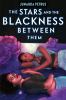 | | The Stars and the Blackness between Them
by Junauda Petrus
Horn Book Audre lives in Trinidad; Mabel in Minneapolis. The two young women meet when Audre, caught by her mother in an embrace with her girlfriend, is sent away to Minneapolis to stay with her father (who is close friends with Mabel's parents). The girls' alternating voices are distinct, even if a plethora of flashbacks and side stories crowd out the main narrative. The prose is sensuous and distinctive; themes of Black power (especially Black lesbian power) are strong; you won't see the ending coming. (c) Copyright 2021. The Horn Book, Inc., a wholly owned subsidiary of Media Source, Inc. No redistribution permitted. (c) Copyright The Horn Book, Inc., a wholly owned subsidiary of Media Source, Inc. No redistribution permitted. Kirkus In Petrus' bewitching debut, Aquarius meets Scorpio and contemplates what comes next.Audre has found religion in the form of Neri, the pastor's granddaughter, much to the chagrin of her religious mother. Sent from Trinidad to Minneapolis to live with her father, Audre is afraid of leaving her beloved grandmother, being cut off from her home culture, and starting over in a new country. Meanwhile, fascinated with Whitney Houston and the singer's supposed romance with a female friend, Mabel is attempting to fit the pieces of her sexuality together. Although she's been feeling sick, she agrees to entertain her father's friend's newly arrived daughter, and Audre and Mabel grow close over the summer. As the school year ramps up, Mabel can no longer ignore her chronic fatigue and pain and must grapple with life-altering news. She finds comfort in reading an old book of her parents', learning about astrology, and seeking Audre's healing presence. Audre's voice is lyrical, and readers will practically hear her Trinidadian accent as she overcomes her fears and self-doubt. Through a nonlinear storyline and two secondary characters, Afua and Queenie, the author beautifully interjects elements of magical realism while delving into the complexities of spirituality. Readers seeking a deep, uplifting love story will not be disappointed as the novel covers both flourishing feelings and bigger questions around belief and what happens when we face our own mortality. Main characters are black.A cosmically compelling read. (Fiction. 14-adult) Copyright Kirkus Reviews, used with permission. Copyright © Kirkus Reviews, used with permission. School Library Journal Gr 8 Up—Sixteen-year-olds Audre and Mabel are from different parts of the world, but over the course of a single bittersweet year they meet and fall in love. Audre has been sent from her home in Trinidad to Minneapolis after her very religious mother finds out she has been having a romantic relationship with another young woman. Meanwhile, Mabel, who has had a boyfriend but has never really been in love, finds herself diagnosed with terminal cancer. At a time when both young women are in desperate need of connection, they find it in each other. Both characters have unique and recognizable voices. Audre's "Trini" accent and culture, in particular, come across loud and clear on the page. Intercalary poetry also enhances the story and will appeal to fans of verse novels. The love story is juxtaposed against the tragic story of a fictional wrongfully incarcerated man, whose death row memoir resonates with Mabel's experience of knowing her death is likely near. This becomes a part of Mabel's last wish through an organization like "Make a Wish Foundation." The wrongful incarceration theme makes this title particularly relevant given the current conversations centered around the wrongful convictions of the "Central Park 5." VERDICT Told in alternating viewpoints and deeply romantic, this title will appeal to fans of Nicola Yoon's The Sun Is Also a Star or Becky Albertalli and Adam Silvera's What If It's Us.—Kristin Lee Anderson, Jackson County Library Services, OR (c) Copyright Library Journals LLC, a wholly owned subsidiary of Media Source, Inc. No redistribution permitted. Publishers Weekly After 16-year-old Audre’s homophobic mother catches her in the arms of her girlfriend, she is shipped from her home in Trinidad to her father in Minneapolis. There, Audre is reunited with her childhood playmate, Mabel, who is slowly coming to terms with her own sexuality, based on her feelings for her ex-boyfriend, her best friend, and the late, great Whitney Houston. Mabel is quickly smitten with Audre, and the girls begin to grow closer until an unexpected medical diagnosis threatens to halt their budding love story. Faced with her own mortality, Mabel seeks out her life’s meaning in the stars and in the words of an infamous death row inmate, while Audre explores her loving conjurer grandmother’s spiritual teachings for an impossible cure for Mabel’s disease. Enfolding lyrical poetry entries told in the girls’ alternating voices that correspond to each “season” of the zodiac, Petrus’s earnest debut successfully, touchingly combines elements of fantasy, bittersweet realism, and potent, affecting spirituality to tell the coming-of-age story of two complex, beautifully drawn young black women whose friendship and love draw them together even as Mabel’s failing health pushes them apart. Ages 14–up. (Sept.) (c) Copyright PWxyz, LLC. All rights reserved Book list Trinidadian native Audre uses the labels placed upon her as a shield, fearing those around her will discover the real reason her mother sent her to live with her distant father in Minneapolis: she was caught wrapped in the arms of another girl. Struggling with her own questions surrounding her sexuality and depleting health, Mabel holds no faith that she's going to have anything in common with Audre, the daughter of a family friend who's just arrived from Trinidad and has a bit of a church-girl reputation. But they find themselves drawn to each other in inexorable ways. Told through unflinching prose and poetry laced with astrological themes, Petrus' work breaks the mold of traditional writing and uses unconventional dialogue and voice to bring life to the story of two authentic, unapologetic Black girls as they face the hardest truths head on and discover everlasting love that reaches even the most distant corners of the cosmos. Through the intersplicing of poetry, Petrus provides compelling depth to both Audre and Mabel while conveying the powerful message that those we love on earth remain with us through a connection that can only be described as celestial. Striking an agile balance between humor and heartbreak, Petrus delivers an immersive queer romance set in in a world much like our own but touched with the slightest tint of magic realism.--Tiana Coven Copyright 2010 Booklist From Booklist, Copyright © American Library Association. Used with permission. |
| ALA Notable Books for Children | 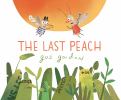 | | The Last Peach
by Gus Gordon
School Library Journal PreS-Gr 2-In this picture book charmer, two insects spot a beautiful peach. They want to eat it, but a praying mantis announces that it is the last peach of the season. Another bug says it looks good, but it could be rotten inside. If they ate it, would they feel sick? The two main insects argue and debate, each one getting a different text font color to make the conversation parts clear. Is the peach magic? Should they share it with others? Perhaps write it an admiring poem? When they get into a physical fight over which one of them should claim it, they declare themselves unworthy, and then leave the peach alone. After they depart, the final image reveals a twist. The glowing orb they have been admiring is actually the sun, positioned so it appears to hang on a tree branch. The collage illustrations are made up of many different colors and types of paper that include words in French, while the end pages depict several varieties of peaches in a luscious photorealistic style. VERDICT Use with Du Iz Tak? and James and the Giant Peach to discuss conflict resolution or for a plant-themed storytime.-Lucinda Snyder Whitehurst, St. Christopher's School, -Richmond, VA © Copyright 2019. Library Journals LLC, a wholly owned subsidiary of Media Source, Inc. No redistribution permitted. (c) Copyright Library Journals LLC, a wholly owned subsidiary of Media Source, Inc. No redistribution permitted. Kirkus Two motley insects contemplate eating the last peach of the season.Gordon presents children with a timeless, rather adult dilemma: how to act in the face of irresistible temptation. Here, two thumb-shaped flylike creaturesone dressed in a Homburg hat and blue-and-white-striped body suit, the other in a red print shirtencounter a sumptuous peach, rosy and golden as the setting sun, still on the branch, and begin to discuss its merits. "It's the most beautiful peach I've seen ALL summer," says the bug dressed in blue. "Wouldn't you agree?" "I do agree," responds the red-shirted friend: "In fact, it's the most beautiful peach I've seen in ALL the summers." The two quickly decide they "must eat that peach at once," but with one page turn, a venerable praying mantis, clad in top hat and cane, stops them, warning: "You can't eat that peach! It's the last peach of the season." In delightfully clever double-page spreads, the two friends then go back and forth, hilariously debating whether to devour the peach together or alone, to share it with others or to leave it entirely. Gordon's witty, collagelike mixed-media illustrations and spare, dialogue-only text not only get at the gnarly pit of indecisionserving up provocative behavioral binaries such as impulsivity versus reflection, indulgence versus sacrifice, hoarding versus sharingbut offer a surprise ending as well.Luscious, light, and thought-provoking: decidedly not to be missed! (Picture book. 3-8) Copyright Kirkus Reviews, used with permission. Copyright © Kirkus Reviews, used with permission. Publishers Weekly This existential meditation by Gordon (Herman and Rosie) deals with some big questions. Two wide-eyed insects contemplate a red-orange globe that hangs suspended amid green leaves. "Oh my," one exclaims. "Now THAT is a fine peach!" They begin the discussion agreeably enough ("Let's eat it. At once!"), but as others weigh in ("You can't eat that peach!"), attitudes shift to anxiety ("We would probably... get big tummy aches"), then to fantasy ("What if we ate it and could suddenly do magical things?") before spiraling into frank conflict: "''That is MY peach!' 'No, it's MY peach!''" Gordon composes leafy collage-style spreads in paper accented with snippets of vintage French type. The insects bear more than a passing resemblance to the clowns in Beckett's Waiting for Godot; one has a hat and a curling proboscis, while the other sports antennae and a red schnozz. In the wistful ending, the two friends decide that the object of their desire is too beautiful to eat, denying themselves the pleasure they've been anticipating all along. And after they leave, another surprise awaits readers. Some desires, this sly fable suggests, may be founded on illusion. Ages 4-8. (May) © Copyright PWxyz, LLC. All rights reserved. (c) Copyright PWxyz, LLC. All rights reserved Book list Do you dare to eat a peach? Certainly the endpapers of this book, which illustrate a variety of mouthwatering peaches, inspire one to do so. Two small, long-nosed insects contemplate the beauty of a particular peach (the very last one of the whole summer), which hangs on a tree above them. They decide they must eat it at once! But when a third green insect with top hat and cane arrives, he cries, Stop! You can't eat that peach! It's the last peach of the season. Hmm. Another tubby, winged character arrives, suggesting that the peach may be stinky and rotten on the inside. Ugh. Well, they could share the peach with all their friends . . . or one could keep it from the other and devour it. Suspense builds, and the magnificent peach remains hanging uneaten, to be admired for its beauty. Contrasting font colors make this a perfect read-aloud for more than one speaker. Collages of fragments of printed words in French, combined with artwork done in watercolor, crayon, and pencil, are surrounded by generous white space, which offsets the round, juicy, delectable peach and the somewhat wacky sartorial dress of the bug-eyed insects with humor and delight. The final surprise ending gives a subtle nod to the ephemeral nature of desire.--Lolly Gepson Copyright 2019 Booklist From Booklist, Copyright © American Library Association. Used with permission. |
| Caldecott Medal Winners | 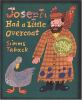 | | Joseph Had a Little Overcoat
by Simms Taback
Publishers Weekly
: As in his Caldecott Honor book, There Was an Old Lady Who Swallowed a Fly, Taback's inventive use of die-cut pages shows off his signature artwork, here newly created for his 1977 adaptation of a Yiddish folk song. This diverting, sequential story unravels as swiftly as the threads of Joseph's well-loved, patch-covered plaid coat. A flip of the page allows children to peek through to subsequent spreads as Joseph's tailoring produces items of decreasing size. The author puts a droll spin on his narrative when Joseph loses the last remnant of the coat--a button--and decides to make a book about it. "Which shows... you can always make something out of nothing," writes Taback, who wryly slips himself into his story by depicting Joseph creating a dummy for the book that readers are holding. Still, it's the bustling mixed-media artwork, highlighted by the strategically placed die-cuts, that steals the show. Taback works into his folk art a menagerie of wide-eyed animals witnessing the overcoat's transformation, miniature photographs superimposed on paintings and some clever asides reproduced in small print (a wall hanging declares, "Better to have an ugly patch than a beautiful hole"; a newspaper headline announces, "Fiddler on Roof Falls off Roof"). With its effective repetition and an abundance of visual humor, this is tailor-made for reading aloud. All ages. (Oct.) Copyright 1999 Cahners Business Information, Inc. Distributed by Syndetic Solutions Inc. Terms
School Library Journal
: Pre-Gr 3-A book bursting at the seams with ingenuity and creative spirit. When Joseph's overcoat becomes "old and worn," he snips off the patches and turns it into a jacket. When his jacket is beyond repair, he makes a vest. Joseph recycles his garments until he has nothing left. But by trading in his scissors for a pen and paintbrush he creates a story, showing "you can always make something out of nothing." Clever die-cut holes provide clues as to what Joseph will make next: windowpanes in one scene become a scarf upon turning the page. Striking gouache, watercolor, and collage illustrations are chock-full of witty details-letters to read, proverbs on the walls, even a fiddler on the roof. Taback adapted this tale from a Yiddish folk song and the music and English lyrics are appended. The rhythm and repetition make it a perfect storytime read-aloud.-Linda Ludke, London Public Library, Ontario, Canada Copyright 2000 Cahners Business Information, Inc. Distributed by Syndetic Solutions Inc. Terms
|
| New York Times Bestsellers | 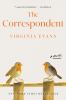 | | The Correspondent
by Virginia Evans
Library Journal Evans's heartfelt debut, told through a series of marvelous letters, gets to the heart of the human connection. Sybil Van Antwerp is a complex figure: a 73-year-old retired lawyer, literary enthusiast, mother, grandmother, ex-wife, sister, adopted daughter, and, above all, dedicated pen pal. She is fiercely stubborn, thoughtful, and blunt; to her great dismay, she is gradually losing her eyesight. Sybil's life story is beautifully told through letters exchanged between her and a range of characters, expertly narrated in this audiobook by a large cast of seasoned voice actors. Sybil corresponds with a staggering variety of people: well-known authors (including Ann Patchett, Larry McMurtry, and Joan Didion), her caring neighbor, family members, friends, professors, long-lost relatives, customer service representatives, and a mysterious, disgruntled person from her past. Each letter is unique, a compelling monologue that communicates raw emotion and grief alongside humor and tart observations. Every missive offers glimpses into the characters' lives, allowing listeners to get to know them through their pieced-together exchanges. VERDICT Evans's epistolary novel is funny and dear, with a family drama and a bit of mystery too. It is a treasure.—Sarah-Ruth Tasko (c) Copyright Library Journals LLC, a wholly owned subsidiary of Media Source, Inc. No redistribution permitted. Book list Evans' debut is an epistolary tour through the mind of retired Maryland law clerk Sybil Von Antwerp, who takes great joy in all forms of correspondence, from handwritten letters to emails. Here are thoughtful missives to her favorite authors such as Joan Didion and Ann Patchett, repeated email requests to audit a course at a local college, and exchanges with a customer service representative that become surprisingly involved. Mixed in with those are letters to friends and family that reveal details about Sybil's life: her divorce long ago from a man she still cares for, her strained relationship with her adult children, and a tragedy that changed the course of Sybil's life and still haunts her. Several developments threaten to upend Sybil's placid existence. She's receiving threatening letters from someone bearing a grudge about a court case from decades ago. She's been gifted with a subscription to a DNA company that will allow her to find blood relatives. And she has not one but two suitors circling her, a tenacious lawyer and a thoughtful, quiet neighbor. Charming, engrossing, and deeply moving, Evans' novel explores the way everyday choices and relationships shape a life and shows it's never too late to form new connections, make amends, or even fall in love. From Booklist, Copyright © American Library Association. Used with permission. Publishers Weekly The charming debut from Evans takes the form of letters and emails exchanged by a divorced and retired woman with her friends, family, foes, and literary idols. It begins in 2012 as Sybil Van Antwerp, 73, politely declines an invitation to visit her brother, Felix, in France, then fancifully invites the author Ann Patchett to use her Maryland home as a writer’s retreat. Sybil spent her career clerking for a judge, and after reading of his death in the newspaper, she begins receiving strange and threatening letters from an aggrieved former defendant, who calls her a “cold metal bitch.” Evans juxtaposes these screeds with Sybil’s intimate fan mail to Joan Didion, who writes her back in 2013, expressing empathy as a fellow member of “the club of parents who have buried children” (Sybil lost a son at eight). Sybil, who was adopted, grows curious about her ancestry after her older son gives her a DNA test for Christmas, and she brushes off concerns about her declining eyesight from her daughter, Fiona, who lives in Australia. As the years go on, Sybil’s relationships brim with tension waiting to be released, and the detailed connections between each character are brilliantly mapped through the correspondence. It adds up to an appealing family drama. Agent: Hilary McMahon, Westwood Creative Artists. (May) (c) Copyright PWxyz, LLC. All rights reserved Kirkus A lifetime’s worth of letters combine to portray a singular character. Sybil Van Antwerp, a cantankerous but exceedingly well-mannered septuagenarian, is the titular correspondent in Evans’ debut novel. Sybil has retired from a beloved job as chief clerk to a judge with whom she had previously been in private legal practice. She is the divorced mother of two living adult children and one who died when he was 8. She is a reader of novels, a gardener, and a keen observer of human nature. But the most distinguishing thing about Sybil is her lifelong practice of letter writing. As advancing vision problems threaten Sybil’s carefully constructed way of life—in which letters take the place of personal contact and engagement—she must reckon with unaddressed issues from her past that threaten the house of cards (letters, really) she has built around herself. Sybil’s relationships are gradually revealed in the series of letters sent to and received from, among others, her brother, sister-in-law, children, former work associates, and, intriguingly, literary icons including Joan Didion and Larry McMurtry. Perhaps most affecting is the series of missives Sybil writes but never mails to a shadowy figure from her past. Thoughtful musings on the value and immortal quality of letters and the written word populate one of Sybil’s notes to a young correspondent while other messages are laugh-out-loud funny, tinged with her characteristic blunt tartness. Evans has created a brusque and quirky yet endearing main character with no shortage of opinions and advice for others but who fails to excavate the knotty difficulties of her own life. As Sybil grows into a delayed self-awareness, her letters serve as a chronicle of fitful growth. An affecting portrait of a prickly woman. Copyright © Kirkus Reviews, used with permission. Copyright © Kirkus Reviews, used with permission. |
| Newbery Medal Winners | 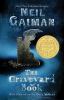 | | The Graveyard Book
by Neil Gaiman
Publishers Weekly
: Starred Review. A lavish middle-grade novel, Gaiman's first since Coraline, this gothic fantasy almost lives up to its extravagant advance billing. The opening is enthralling: There was a hand in the darkness, and it held a knife. Evading the murderer who kills the rest of his family, a child roughly 18 months old climbs out of his crib, bumps his bottom down a steep stairway, walks out the open door and crosses the street into the cemetery opposite, where ghosts take him in. What mystery/horror/suspense reader could stop here, especially with Gaiman's talent for storytelling? The author riffs on the Jungle Book, folklore, nursery rhymes and history; he tosses in werewolves and hints at vampires—and he makes these figures seem like metaphors for transitions in childhood and youth. As the boy, called Nobody or Bod, grows up, the killer still stalking him, there are slack moments and some repetition—not enough to spoil a reader's pleasure, but noticeable all the same. When the chilling moments do come, they are as genuinely frightening as only Gaiman can make them, and redeem any shortcomings. Ages 10–up. (Oct.) Copyright © Reed Business Information, a division of Reed Elsevier Inc. All rights reserved. Distributed by Syndetic Solutions Inc. Terms
School Library Journal
: Gr 5–8—Somewhere in contemporary Britain, "the man Jack" uses his razor-sharp knife to murder a family, but the youngest, a toddler, slips away. The boy ends up in a graveyard, where the ghostly inhabitants adopt him to keep him safe. Nobody Owens, so named because he "looks like nobody but himself," grows up among a multigenerational cast of characters from different historical periods that includes matronly Mistress Owens; ancient Roman Caius Pompeius; an opinionated young witch; a melodramatic hack poet; and Bod's beloved mentor and guardian, Silas, who is neither living nor dead and has secrets of his own. As he grows up, Bod has a series of adventures, both in and out of the graveyard, and the threat of the man Jack who continues to hunt for him is ever present. Bod's love for his graveyard family and vice versa provide the emotional center, amid suspense, spot-on humor, and delightful scene-setting. The child Bod's behavior is occasionally too precocious to be believed, and a series of puns on the name Jack render the villain a bit less frightening than he should be, though only momentarily. Aside from these small flaws, however, Gaiman has created a rich, surprising, and sometimes disturbing tale of dreams, ghouls, murderers, trickery, and family.—Megan Honig, New York Public Library Copyright © Reed Business Information, a division of Reed Elsevier Inc. All rights reserved. Distributed by Syndetic Solutions Inc. Terms
|
| Oprah's Book Club | 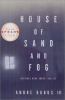 | | House of Sand and Fog
by Andre Dubus
Library Journal: In his second novel (after Bluesman, LJ 5/15/93), the son of noted writer Andre Dubus manages to get deep inside the heads of two very different characters who clash over a modest house in the San Francisco suburbs. Kathy is a recovering alcoholic and cokehead who loses her inherited bungalow for alleged nonpayment of taxes. Behmini, an Iranian who was an officer in the Shah's air force before fleeing the revolution, is now struggling to succeed in the United States. He buys the house at auction, planning to make a profit on the resale. Kathy skulks around the neighborhood and eventually confronts the family. When she becomes sexually involved with the policeman she met at her eviction, a married man with bad judgment and a drinking problem of his own, he takes up her cause with explosive results. Dubus's attention to detail and realistic prose style give the narrative a hard-edged, cinematic quality, but unlike many movies, its outcome is unexpected. Recommended for all fiction collections. Reba Leiding, James Madison Univ., Harrisonburg, VA Distributed by Syndetic Solutions Inc. Terms
Publishers Weekly: This powerfully written but bleak narrative is a mesmerizing tale of the American Dream gone terribly awry. Massoud Amir Behrani, a former colonel in the Iranian Air Force under the Shah, now lives in exile with his wife and teenage son near San Francisco. Working on a road crew as a "garbage soldier" by day and as a deli clerk by night, Behrani is obsessed with restoring his family to the position of glittering wealth and prestige it once enjoyed. At a county auction, he sinks his savings into a bungalow seized for non-payment of taxes, and quickly moves his family into it, planning to resell the house at a sizable profit. But when the house's previous occupant, recovering coke addict Kathy Lazaro, resurfaces with valid claims for repossession, Behrani's plan begins to unravel, and with it his tightly controlled facade of composure. Tensions between Lazaro and Behrani quickly escalate into violence, as Lazaro's lover, a married police officer with a weak spot for lost causes, decides to take matters into his own hands. The book's horrifying denouement offers readers a searing study in the wages of pride. Dubus (Bluesman) writes with an authority regarding the American lower middle class that is reminiscent of Russell Banks and Richard Ford, and his limber imagination is capable of drawing the inner lives of three very different main characters with such compassion that readers will find their sympathies hopelessly divided. If the tragedy that he so skillfully orchestrates cries out to be leavened with a little less desperation and some quiet glimpse of hope, the keenly perceptive and moving narrative is proof that the son and namesake of one of our most talented writers has embarked on a dazzling career in his own right. Copyright 1998 Cahners Business Information, Inc. Distributed by Syndetic Solutions Inc. Terms
|
|

