|
|
| ALA Best Books for Young Adults | 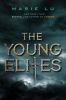 | | Young elites.
by by Marie Lu
Publishers Weekly Starred Review. In this series opener, Lu (the Legend trilogy) pivots from the "coming of age via romance"� formula to pry apart the many emotions that pass under the rubric of love. Adelina Amouteru, once-privileged daughter of a merchant, is irrevocably changed by the blood fever, an epidemic that wiped out infected adults and left most child survivors permanently scarred malfettos. A handful also underwent mutations that conferred strange, often lethal powers. All malfettos are persecuted, but these mutant Young Elites are special targets. Harrowingly, Adelina discovers that she is one. Rescued by a masked firebrand from certain death under the government's Inquisition, she awakens in the custody of Raffaele, a male prostitute, and Enzo, malfetto aspirant to the throne. A beautiful woman surrounded by beautiful men, Adelina nevertheless is not defined by romance. Warped family bonds shape her consciousness and yearning for acceptance, and the men are out to get what they want from her. There's nothing easy here, for Adelina or readers-there are no safe places where the pressures of betrayal, death threats, and rejection aren't felt. Ages 12-up. Agent: Kristin Nelson, Nelson Literary Agency. (Oct.) (c) Copyright PWxyz, LLC. All rights reserved. (c) Copyright PWxyz, LLC. All rights reserved Kirkus A new seriesfantasy, this timefrom the author of the best-selling Legend dystopia. Twelve years ago, the blood fever raged through Kenettra, killing all infected adults and leaving the surviving children marked with scars, patterned skin and unnaturally colored hair. Malfetto, the survivors are called, and everyone knows they are terrible luck. A few malfettos are rumored to have great and mystical powers, and these Young Elites are sought by the Inquisition even while the common people secretly cheer on their defiance against a cruel and ineffectual king. Adelina is a 16-year-old malfetto, tormented by her abusive father until her own Young Elite power reveals itself. Both the Inquisition and the Young Elites want to use her, but Adelina wants only to protect herself and her beloved sister. She's no heroic savior; Adelina's Young Elite strength is honed by a decade of abuse and torment that's turned her into a force motivated foremost by rage and terror. Shifting points of view reveal the forces that treat Adelina as a pawn in a game much larger than she can understand, driving her to an extremely unusual lead-in for Volume 2. In a gorgeously constructed world that somewhat resembles Renaissance Italy but with its own pantheon, geography and fauna, the multiethnic and multisexual Young Elites offer a cinematically perfect ensemble of gorgeous-but-unusual illusionists, animal speakers, fire summoners and wind callers. A must for fans of Kristin Cashore's Fire (2009) and other totally immersive fantasies. (Fantasy. 13 up) Copyright Kirkus Reviews, used with permission. Copyright © Kirkus Reviews, used with permission. Book list *Starred Review* Adelina Amouteru is a walking wound. A deadly fever has ravaged her country, killing many and leaving others marked in strange and dangerous ways. Adelina is a survivor who carries two marks: once-black hair has turned silver, and her left eye is gone. Known as malfettos, those scarred by the disease are considered bad luck, even dangerous. There are rumors that some survivors have magical abilities, and after a dark confrontation with her power-hungry father, Adelina discovers that the fever may have left her with more than scars after all. Thrust into a group of rebel malfettos, the Young Elites, Adelina realizes the extent of her latent powers. Those familiar with Lu's wildly popular Legend series will recognize the author's propensity to include multiple perspectives, and here those viewpoints include other members of the Young Elites and their rebel leader, as well as the queen's Inquisitor, who is hunting them all. Still, this is Adelina's tale. Part bildungsroman, part origin story, this explores the idea that what damages you gives you strength, but often with a price. Lu's careful world building does slow the plot, but the result is that Adelina's Italianesque culture is believable, and the story leads to a whopper of a finale and an even more intriguing epilogue. Fans of Legend or not, readers should prepare to be captivated and to look forward to a continuation of the Young Elites series. HIGH-DEMAND BACKSTORY: A national author tour and promotions at BEA and Comic-Con will help start the buzz for this author, who has already proven she can draw a crowd.--Reagan, Maggie Copyright 2014 Booklist From Booklist, Copyright © American Library Association. Used with permission. School Library Journal Gr 8 Up-A rollicking series opener from the author of the "Legend" series (Putnam). Imagine surviving a plague of fever, only to be marked as an abomination by your countrymen. Most survivors of the sickness that vanquished thousands in this alternative medieval world possess a strange and unique marking, whether it be a facial coloring, oddly tinged hair, or, in Adelina's case, a missing eye. Called malfettos, some are endowed with magical gifts that enable them to control wind, fire, earth, and even humans. All Adelina has ever wanted is to feel accepted and loved, but she's ignored by her father, and her sister doesn't have the power to save her. When the teen escapes an unwanted proposal, she unwittingly becomes a member of the Dagger Society, an Elite group of malfettos bent on using their supernatural abilities to escape the Inquisition's genocide and place their leader, Enzo, on the throne of Kenettra. Adelina struggles with an increasing distrust of Enzo, her fellow Elites, and herself, all while learning how to control her powers of illusion and disillusion. Lu seamlessly melds an unforgettable and intoxicating historical fantasy narrative with a strong female protagonist that grapples with an issue experienced by all young adults-acceptance of one's self. Well written, fast paced without being confusing, and enjoyable enough for teens, reluctant readers, and even adults. Brimming with engaging battles-physical and emotional-and meticulous backdrops, Lu's new series will be a surefire hit with old and new fans alike.- Amanda C. Buschmann, Atascocita Middle School, Humble, TX (c) Copyright 2014. Library Journals LLC, a wholly owned subsidiary of Media Source, Inc. No redistribution permitted. (c) Copyright Library Journals LLC, a wholly owned subsidiary of Media Source, Inc. No redistribution permitted. |
| ALA Notable Books for Children | 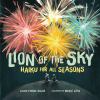 | | Lion of the Sky: Haiku for All Seasons.
by Laura Purdie Salas
Book list In this charming, beautifully illustrated collection, arranged by season, Salas employs a form she calls riddle-ku, a first-person haiku that hints at the speaker, inviting readers to guess its identity, typically an object or being associated with a season. For example, Spring opens with I am a wind bird, / sky skipper, diamond dipper, / DANCING on your string, and López's accompanying illustration depicts a soaring, large, red, bird-shaped kite guided by a boy holding the string below. Summer showcases fireflies, baseball, and fireworks. Fall features a school building ( my first-day outfit / is fresh paint and polished floors / here come my new friends! ), apple picking, and jack-o'-lanterns, while Winter includes snow, ice skates, and a hibernating animal: In fur coat and cave / I exhale white clouds of breath, / DREAM of sun . . . green . . . spring. The eloquent language ranges from philosophical to whimsical, and that tone is reflected in the colorful acrylic paintings, which nicely combine realism and abstract touches and provide visual clues. An author's note offers the inspiration behind her riddle-ku, with encouragement for readers to create their own; an answer key; and a further-reading list. While the riddles' mystique may wane once little ones solve them, the wonderfully evocative, vivid imagery in text and art also make this a welcome addition for poetry classroom units.--Shelle Rosenfeld Copyright 2019 Booklist From Booklist, Copyright © American Library Association. Used with permission. Kirkus In this spirited collaboration, Salas and Lpez present 24 suggestive poetic snapshots chronicling the cycle of a year. Highlighting season-appropriate objects for spring, fall, summer, and winter, Salas magnifies the spareness of the haiku form by turning each concentrated first-person portrait into a riddle as she tantalizingly omits naming the subject describing itself. Meanwhile Lpez offers young and pre-readers florid visual hints, depicting in deft brush strokes and lush colors the author's hidden subjects. Combined, these artists render objects gentle as summer's fireflies ("fire in our bellies / we FLICKER-FLASH in twilight / rich meadow of stars") or winter's snowflakes ("I'm cold confetti / falling from a crystal sky, / blanketing the town," here shown as a white-roofed town in a snow globe painted against a wintry verdigris sky spackled with haphazard white blots) or bold as a fall jack-o'-lantern ("I perch on the porch, / spooky face frozen in place, / fire BURNING inside"glowering large with flaming orange eyes as the finger of a ghostly trick-or-treater rings the doorbell in the background). What sets this volume apart from similar haiku explorations of the seasons is the tight synthesis of visual object and oblique verbal depiction, making for both wonderfully contemplative experiences of each illustrated poem and the seamless progression of nature's cycle through the year.Richly rewarding and clever: a visually arresting, inventive treatment of a popular subject. (Picture book/poetry. 5-10) Copyright Kirkus Reviews, used with permission. Copyright © Kirkus Reviews, used with permission. Publishers Weekly Organized in four sections beginning with spring, Salas's lovely haiku are written in the voices of animals and organic or inanimate objects related to the seasons. "Fire in our bellies,/ we FLICKER-FLASH in twilight-/ rich meadow of stars," speak the summer's fireflies. Each haiku contains a riddle element-readers must guess the narrator (in an author's note, Salas refers to the form as a "riddle-ku"). It's not always clear who, or what, is speaking, but LA3pez's evocative acrylics visually communicate the imagery within the poems. "I'm a WRIGGLING tube,/ soft underground tunneler-/ I fear early birds," one announces. The small bird hovering over a hole clues readers in to the speaker's identity: a worm. The book's meditative tone and resonant images invite readers to embrace new ways of seeing the world around them. Ages 5-9. (Apr.) © Copyright PWxyz, LLC. All rights reserved. (c) Copyright PWxyz, LLC. All rights reserved Horn Book Divided into four sections by season, these "riddle-ku" poems use innovative language to represent something traditionally associated with each one. (For back-to-school in fall, for example: what is "a yellow train / carrying thoughts from your brain / to the waiting page?" A pencil.) In addition to helping readers solve the puzzles, the supporting acrylic and digital illustrations capture movement and texture through strong lines and seasonal hues. (c) Copyright 2019. The Horn Book, Inc., a wholly owned subsidiary of Media Source, Inc. No redistribution permitted. (c) Copyright The Horn Book, Inc., a wholly owned subsidiary of Media Source, Inc. No redistribution permitted. School Library Journal Gr 1-4-A sleek bird kite flown by a child in springtime kicks off this poetic collection of seasonal objects, animals, and activities. Six poems per season invite audience observation and enjoyment. First-time readers may not realize that each haiku is also a riddle with a list of answers found at the end of the book. Only in her concluding author's note does Salas describe the structure she calls "riddle-ku." Readers are meant to guess the identity of the non-human narrator in each poem. She also notes that the non-human voices make these "mask poems." Simple instructions then encourage readers to compose their own riddle-ku. The expansive acrylic scenes featuring children, animals and/or objects offer visual cues about the narrators. For instance, the leaves talk as a child happily bounces in a pile of them. Salas often sets a playful tone and is adept with language. Her diction and syntax are simple and fun. Paired with other seasonal materials, this book offers ample discussion and teaching opportunities with individual readers or groups. VERDICT This well-crafted work contains versatile possibilities for classrooms and libraries.-Margaret Bush, Simmons College, Boston © Copyright 2019. Library Journals LLC, a wholly owned subsidiary of Media Source, Inc. No redistribution permitted. (c) Copyright Library Journals LLC, a wholly owned subsidiary of Media Source, Inc. No redistribution permitted. |
| Caldecott Medal Winners | 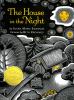 | | The House in the Night
by Susan Marie Swansonk
Publishers Weekly
: Starred Review. Using only a few graceful words per page to illuminate the dark, this bedtime gem shines its light clearly on things that matter—a home filled with books, art, music and ever-present love. Krommes's ( The Lamp, the Ice, and a Boat Called Fish) astonishing illustrations are so closely intertwined with the meticulous text that neither can be isolated without a loss of meaning. The book begins, intriguingly, Here is the key to the house./ In the house burns a light./ In that light rests a bed./ On that bed waits a book. That book takes the child reader up into the skies and back home again, to sleep (dark in the song, song in the bird, / bird in the book, book on the bed). Krommes's black-and-white scratchboard illustrations are as delicate and elegant as snowflakes, and she uses a single color, a marigold, to bring warmth to both home and stars. This volume's artful simplicity, homely wisdom and quiet tone demonstrate the interconnected beauty and order of the world in a way that both children and adults will treasure. Ages 3–6. (May) Copyright © Reed Business Information, a division of Reed Elsevier Inc. All rights reserved. Distributed by Syndetic Solutions Inc. Terms
School Library Journal
: Starred Review. PreS-Gr 1—Inspired by traditional cumulative poetry, Swanson weaves a soothing song that is as luminescent and soulful as the gorgeous illustrations that accompany her words. A journey both humble and epic begins with a key to a house. "Here is the key to the house./In the house burns a light./In that light rests a bed…." In the bedroom of the house, a girl reads a book in which a bird "breathes a song…all about the starry dark." Swanson's poem then takes readers on a flight across the night sky to the realm of the moon and sun, then back along the path to the key that marked the beginning of the journey. Krommes's folk-style black-and-white etchings with touches of yellow-orange make the world of the poem an enchanted place. Patches of light and shadow give shape to the darkness, while smiling celestial bodies populate the potentially lonely night with their friendly warmth. This picture book will make a strong impression on listeners making their first acquaintance with literature. It is a masterpiece that has all the hallmarks of a classic that will be loved for generations to come.—Jayne Damron, Farmington Community Library, MI Copyright © Reed Business Information, a division of Reed Elsevier Inc. All rights reserved. Distributed by Syndetic Solutions Inc. Terms
|
| New York Times Bestsellers | 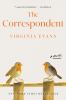 | | The Correspondent
by Virginia Evans
Library Journal Evans's heartfelt debut, told through a series of marvelous letters, gets to the heart of the human connection. Sybil Van Antwerp is a complex figure: a 73-year-old retired lawyer, literary enthusiast, mother, grandmother, ex-wife, sister, adopted daughter, and, above all, dedicated pen pal. She is fiercely stubborn, thoughtful, and blunt; to her great dismay, she is gradually losing her eyesight. Sybil's life story is beautifully told through letters exchanged between her and a range of characters, expertly narrated in this audiobook by a large cast of seasoned voice actors. Sybil corresponds with a staggering variety of people: well-known authors (including Ann Patchett, Larry McMurtry, and Joan Didion), her caring neighbor, family members, friends, professors, long-lost relatives, customer service representatives, and a mysterious, disgruntled person from her past. Each letter is unique, a compelling monologue that communicates raw emotion and grief alongside humor and tart observations. Every missive offers glimpses into the characters' lives, allowing listeners to get to know them through their pieced-together exchanges. VERDICT Evans's epistolary novel is funny and dear, with a family drama and a bit of mystery too. It is a treasure.—Sarah-Ruth Tasko (c) Copyright Library Journals LLC, a wholly owned subsidiary of Media Source, Inc. No redistribution permitted. Book list Evans' debut is an epistolary tour through the mind of retired Maryland law clerk Sybil Von Antwerp, who takes great joy in all forms of correspondence, from handwritten letters to emails. Here are thoughtful missives to her favorite authors such as Joan Didion and Ann Patchett, repeated email requests to audit a course at a local college, and exchanges with a customer service representative that become surprisingly involved. Mixed in with those are letters to friends and family that reveal details about Sybil's life: her divorce long ago from a man she still cares for, her strained relationship with her adult children, and a tragedy that changed the course of Sybil's life and still haunts her. Several developments threaten to upend Sybil's placid existence. She's receiving threatening letters from someone bearing a grudge about a court case from decades ago. She's been gifted with a subscription to a DNA company that will allow her to find blood relatives. And she has not one but two suitors circling her, a tenacious lawyer and a thoughtful, quiet neighbor. Charming, engrossing, and deeply moving, Evans' novel explores the way everyday choices and relationships shape a life and shows it's never too late to form new connections, make amends, or even fall in love. From Booklist, Copyright © American Library Association. Used with permission. Publishers Weekly The charming debut from Evans takes the form of letters and emails exchanged by a divorced and retired woman with her friends, family, foes, and literary idols. It begins in 2012 as Sybil Van Antwerp, 73, politely declines an invitation to visit her brother, Felix, in France, then fancifully invites the author Ann Patchett to use her Maryland home as a writer’s retreat. Sybil spent her career clerking for a judge, and after reading of his death in the newspaper, she begins receiving strange and threatening letters from an aggrieved former defendant, who calls her a “cold metal bitch.” Evans juxtaposes these screeds with Sybil’s intimate fan mail to Joan Didion, who writes her back in 2013, expressing empathy as a fellow member of “the club of parents who have buried children” (Sybil lost a son at eight). Sybil, who was adopted, grows curious about her ancestry after her older son gives her a DNA test for Christmas, and she brushes off concerns about her declining eyesight from her daughter, Fiona, who lives in Australia. As the years go on, Sybil’s relationships brim with tension waiting to be released, and the detailed connections between each character are brilliantly mapped through the correspondence. It adds up to an appealing family drama. Agent: Hilary McMahon, Westwood Creative Artists. (May) (c) Copyright PWxyz, LLC. All rights reserved Kirkus A lifetime’s worth of letters combine to portray a singular character. Sybil Van Antwerp, a cantankerous but exceedingly well-mannered septuagenarian, is the titular correspondent in Evans’ debut novel. Sybil has retired from a beloved job as chief clerk to a judge with whom she had previously been in private legal practice. She is the divorced mother of two living adult children and one who died when he was 8. She is a reader of novels, a gardener, and a keen observer of human nature. But the most distinguishing thing about Sybil is her lifelong practice of letter writing. As advancing vision problems threaten Sybil’s carefully constructed way of life—in which letters take the place of personal contact and engagement—she must reckon with unaddressed issues from her past that threaten the house of cards (letters, really) she has built around herself. Sybil’s relationships are gradually revealed in the series of letters sent to and received from, among others, her brother, sister-in-law, children, former work associates, and, intriguingly, literary icons including Joan Didion and Larry McMurtry. Perhaps most affecting is the series of missives Sybil writes but never mails to a shadowy figure from her past. Thoughtful musings on the value and immortal quality of letters and the written word populate one of Sybil’s notes to a young correspondent while other messages are laugh-out-loud funny, tinged with her characteristic blunt tartness. Evans has created a brusque and quirky yet endearing main character with no shortage of opinions and advice for others but who fails to excavate the knotty difficulties of her own life. As Sybil grows into a delayed self-awareness, her letters serve as a chronicle of fitful growth. An affecting portrait of a prickly woman. Copyright © Kirkus Reviews, used with permission. Copyright © Kirkus Reviews, used with permission. |
| Newbery Medal Winners | 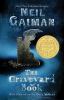 | | The Graveyard Book
by Neil Gaiman
Publishers Weekly
: Starred Review. A lavish middle-grade novel, Gaiman's first since Coraline, this gothic fantasy almost lives up to its extravagant advance billing. The opening is enthralling: There was a hand in the darkness, and it held a knife. Evading the murderer who kills the rest of his family, a child roughly 18 months old climbs out of his crib, bumps his bottom down a steep stairway, walks out the open door and crosses the street into the cemetery opposite, where ghosts take him in. What mystery/horror/suspense reader could stop here, especially with Gaiman's talent for storytelling? The author riffs on the Jungle Book, folklore, nursery rhymes and history; he tosses in werewolves and hints at vampires—and he makes these figures seem like metaphors for transitions in childhood and youth. As the boy, called Nobody or Bod, grows up, the killer still stalking him, there are slack moments and some repetition—not enough to spoil a reader's pleasure, but noticeable all the same. When the chilling moments do come, they are as genuinely frightening as only Gaiman can make them, and redeem any shortcomings. Ages 10–up. (Oct.) Copyright © Reed Business Information, a division of Reed Elsevier Inc. All rights reserved. Distributed by Syndetic Solutions Inc. Terms
School Library Journal
: Gr 5–8—Somewhere in contemporary Britain, "the man Jack" uses his razor-sharp knife to murder a family, but the youngest, a toddler, slips away. The boy ends up in a graveyard, where the ghostly inhabitants adopt him to keep him safe. Nobody Owens, so named because he "looks like nobody but himself," grows up among a multigenerational cast of characters from different historical periods that includes matronly Mistress Owens; ancient Roman Caius Pompeius; an opinionated young witch; a melodramatic hack poet; and Bod's beloved mentor and guardian, Silas, who is neither living nor dead and has secrets of his own. As he grows up, Bod has a series of adventures, both in and out of the graveyard, and the threat of the man Jack who continues to hunt for him is ever present. Bod's love for his graveyard family and vice versa provide the emotional center, amid suspense, spot-on humor, and delightful scene-setting. The child Bod's behavior is occasionally too precocious to be believed, and a series of puns on the name Jack render the villain a bit less frightening than he should be, though only momentarily. Aside from these small flaws, however, Gaiman has created a rich, surprising, and sometimes disturbing tale of dreams, ghouls, murderers, trickery, and family.—Megan Honig, New York Public Library Copyright © Reed Business Information, a division of Reed Elsevier Inc. All rights reserved. Distributed by Syndetic Solutions Inc. Terms
|
| Oprah's Book Club | 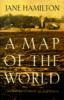 | | A Map of the World
by Jane Hamilton
Library Journal: This second novel by Hamilton (The Book of Ruth, LJ 11/1/88) is a stunning exploration of how one careless moment can cause irrevocable and devastating change. Alice Goodwin is caring for her best friend's children when two-year-old Lizzy Collins wanders to the pond on the Goodwin farm and drowns. The consequences of this tragedy reverberate through a small Wisconsin community, which never accepted Howard and Alice Goodwin. Theresa Collins, bereft at losing a child and a dear friend, draws on her Catholic religion and finds forgiveness. Alice, immobilized by guilt and grief and unable to function as a wife or mother to her own two daughters, is charged with abusing children in her part-time job as a school nurse. Lizzy's death is ever present-especially in the bond growing between Theresa and Howard while Alice is in jail-and the pain of it is echoed in Alice's primary young accuser and in Alice as a child, drawing her own map of the world after her mother died. Reminiscent of Rosellen Brown's Tender Mercies (1978), this compelling, multilayered fiction belongs in all collections.-Michele Leber, Fairfax Cty. P.L., Va. Copyright 1994 Cahners Business Information, Inc. Distributed by Syndetic Solutions Inc. Terms
Publishers Weekly: Booksellers should send up three cheers of greeting for this haunting second novel by the author of The Book of Ruth , a beautifully developed and written story reminiscent of the work of Sue Miller and Jane Smiley. A piercing picture of domestic relationships under the pressure of calamitous circumstances, it poignantly addresses the capricious turns of fate and the unyielding grip of regret. Alice and Howard Goodwin and their two young daughters live on the last remaining dairy farm on the outskirts of Racine, Wisc. The farm is Howard's dream, realized with infusions of money from his disapproving mother; but Alice, who is disorganized, skittery and emotionally volatile, is constitutionally unsuited to be a farmer's wife. Her solace is her best friend Theresa, who also has two little girls for whom they alternate days of babysitting. One hot, dry June morning, in the middle of a soul-parching drought, Alice daydreams for a few, crucial minutes while the four girls play. She has rediscovered the map of the world that she made after her own mother died when she was eight; it was an attempt to imagine a place where she would always feel safe and secure. In that short time, one of Theresa's daughters drowns in the Goodwins' pond. As outsiders from the city, the Goodwins have never been accepted in their small community, which now closes forces against them. Still grieving and filled with remorse, Alice, a school nurse, is accused by an opportunistic mother of sexually molesting her son. She is arrested, and since Howard cannot raise bail, she remains in jail, where she suffers but also learns a great deal about human frailty and solidarity. Meanwhile, Howard and the girls undergo their own crucible of fire. Among Hamilton's gifts is a perfect ear for the interchanges of domestic life. The voices of Alice and Howard, who narrate the tale, have an elegiac, yet compelling tone as they look back on the events that swept them into a horrifying nightmare. In counterpoint to the shocks that transform their existence, the drudgery of the daily routine of farm life has rarely been conveyed with such fidelity. Fittingly, however, the death of their hopes as a family coincides with Howard's realization that the farmer's way of life is disappearing as well. The last third of the book, detailing Alice's incarceration among mainly black inmates, is astonishingly perceptive and credible, opening new dimensions in the narrative. One wants to read this powerful novel at one sitting, mesmerized by a story that has universal implications. BOMC and QPB selection. Copyright 1994 Cahners Business Information, Inc. Distributed by Syndetic Solutions Inc. Terms
|
|

