|
|
| Caldecott Medal Winners |  | | Big
by Vashti Harrison
Horn Book As Harrison writes in her author's note, "In childhood, big is good. Big is impressive, aspirational. But somewhere along the way, the world begins to tell us something different: That big is bad. That being big is undesirable." Words matter, as a beautiful little Black girl learns. The girl, a dancer who wears a leotard and tutu throughout the book, "grew and learned and laughed...and grew and grew and grew. And it was good...until it wasn't." When she accidentally gets stuck in the baby swing on the school playground, her classmates and even her teacher hurl hurtful words and laughter, which begin to affect the youngster's self-esteem and self-perception. The text is spare but pointed; Harrison's emotionally powerful, pink-hued illustrations focus on her protagonist's inner experience. The girl looks like a giant in school and at dance class, "exposed, judged, yet invisible." The openness of the illustrations gives way to more cramped and overwhelming compositions as the girl, now in blue-gray, feels increasingly hemmed in by others' judgments -- a visible statement about the impact of fatphobia and the adultification of Black children. This girl's story ends triumphantly; she takes her teacher's and classmates' hateful words and hands them back, saying, "These are yours. They hurt me." This book offers readers an opportunity to remember that we all deserve love and respect -- no matter what size we are. (c) Copyright 2023. The Horn Book, Inc., a wholly owned subsidiary of Media Source, Inc. No redistribution permitted. (c) Copyright The Horn Book, Inc., a wholly owned subsidiary of Media Source, Inc. No redistribution permitted. Kirkus A young Black girl who is told she is too big learns which labels to keep. When she was a baby, being a “big girl” was good. But at a certain point, getting bigger becomes tinged with negativity. Adults are frustrated with the girl because of her size. Other children tease her. On the playground and in ballet, where she used to feel joyous and free, the girl is humiliated. On wordless spreads, all alone, the girl fills the tightly constricted pages, as if trapped by their borders. She lets her feelings out in tears that form a puddle of words—the criticisms of others as well as more positive ones: imaginative, creative, compassionate. Finally, she is able to see clearly, and she decides “to make more space for herself” by pushing the boundaries of the page in a powerful fold-out spread. After that, she knows how to separate the words that do and don’t belong to her and what to do with them. Textured illustrations in a soft, predominantly pink palette endear the protagonist to readers, while spare, carefully crafted text delivers an important message of self-acceptance and combating anti-fat bias that never feels preachy or overdone. Bestselling creator Harrison has produced another classic that belongs on every child’s shelf—this is one that will nurture little ones and help them to see the beauty in themselves. A healing balm with the power to make the world a bit kinder. (author’s note) (Picture book. 4-9) Copyright © Kirkus Reviews, used with permission. Copyright © Kirkus Reviews, used with permission. Publishers Weekly This ode to big self-love from Harrison (Sulwe) begins with a smiling, brown-skinned baby girl who has “a big laugh and a big heart/ and very big dreams.” Through a series of emotionally centered, affectionate digital images set against dreamy chalk pastel backdrops, this smiling, bouncing baby becomes a child who “learned and laughed and dreamed and grew and grew and grew. And it was good... until it wasn’t.” The dancing, playful child becomes the subject of cruel playground taunts when she gets stuck in a swing, and receives criticism from a teacher that “made her feel small.” Overwhelmed by others’ derision, the girl runs away from a dance rehearsal in which she’s made to wear plain colors and embody a mountain instead of a flower. A moving several-spread sequence, which includes a gatefold, portrays the overwhelmed child as increasingly cramped within the pages—and others’ judgments—before she gives the words back (“These are yours./ They hurt me”) and makes room for everything she loves (“I like the way I am”). Full of important truths about adultification and anti-fat bias, Harrison’s deceptively simple telling tenderly offers the self-affirming beliefs that kids are kids in any body and that it’s okay to take up space. An author’s note concludes. Ages 4–8. Agent: Carrie Hannigan, HG Literary. (May) (c) Copyright PWxyz, LLC. All rights reserved |
| Newbery Medal Winners | 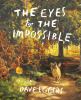 | | The Eyes and the Impossible
by Dave Eggers
Publishers Weekly In this exuberant illustrated novel by previous collaborators Eggers and Harris (What Can a Citizen Do?), high-spirited narrator Johannes is an “unkept and free” dog entrusted by the Keepers of the Equilibrium—three penned Bison who oversee the park where they all live—to be the park’s Eyes. Aided by a team of “comrades, allies” known as the Assistant Eyes (seagull Bertrand, squirrel Sonja, pelican Yolanda, and raccoon Angus), Johannes reports each day’s occurrences to the Bison, including anything that might upset the Equilibrium. When construction activity is detected, Johannes encounters “rectangles full of gorgeous commotion”—an art display that transfixes him, leading to his being leashed. After a dramatic cooperative rescue devised by the Assistant Eyes, Johannes realizes the “glory of liberation” and determines to free the Bison from their enclosure. Studded with strong opinions about the park’s residents (“The ducks know nothing”), a quick-moving first-person voice melds the dog’s background, beliefs, and observations. Eggers crafts a marvelous, fully fleshed protagonist in Johannes, who is at once an ebullient braggart, a faithful and intrepid operative, and a drolly humorous reporter whose compassionate narration delivers a rousing tale of community, joyful self-reliance, and the pleasures of running very, very fast. Aligning with themes of art and perspective, Harris contributes illustrations of Johannes as added to full-page reproductions of classical landscapes. Ages 8–12. (May) (c) Copyright PWxyz, LLC. All rights reserved Kirkus A wild dog who serves as the Eyes for Bison living in a park enclosure devises a plan to free them. Exuberant, observant dog Johannes runs daily throughout the park, which is visited by humans, reporting to Freya, Meredith, and Samuel, three old Bison who are the Keepers of the Equilibrium. Johannes and other Assistant Eyes—a sea gull, a squirrel, a pelican, and a raccoon—describe an art museum being built in the park, a “building full of chaos-rectangles.” Johannes finds it captivating, leading to his capture by humans—and subsequent rescue by the other Eyes in a demonstration of interspecies cooperation. This gives him the idea to free the Bison. The appearance of goats, who have been brought in to eat weeds, provides a friend, a revelation, and a new plan and purpose: “to pull off the impossible.” Johannes’ first-person narration is an interesting mix of poetic language, sophisticated vocabulary, philosophy, humor, hyperbole, and both short declarative and run-on sentences; his estimations of time, size, and quantity are particularly exaggerated. Johannes’ loyalty, friendship, and commitment to a noble purpose, even as his sense of self shifts, the stakes are raised, and last-minute changes to the plan occur, make him an admirable character. The artwork consists of double-page spreads reproducing magnificent fine art landscapes into which Harris has seamlessly inserted Johannes, cleverly adapting to each painter’s style and color palette. One remarkable creature vividly shows readers that “there is so, so much to see.” (author’s note, sources) (Fiction. 9-14) Copyright © Kirkus Reviews, used with permission. Copyright © Kirkus Reviews, used with permission. Book list Johannes has always lived his life as a free dog in a vast park by the sea. Three captive elderly bison are the Keepers of the Equilibrium and overseers of the land, and they’ve dubbed Johannes “the Eyes,” as his agility and observant gaze allow him to notice the park’s happenings and report back to the bison. An assortment of wild animals assists Johannes on his daily intel gatherings, and he’s content in his dear friendships and freedom. But change is afoot: an enormous building containing mesmerizing rectangles is being built, a herd of mysterious creatures has set up shop in a field, and a heroic act brings Johannes intense human scrutiny that impedes his duties as the Eyes. It will require all of Johannes’ ingenuity, kindness, and speed to navigate the new developments while maintaining his precious independence. The utterly delightful book is narrated by a distinctly canine voice similar to the narrator’s in Eggers’ short story “After I Was Thrown in the River and Before I Drowned,” and though Johannes is prone to matter-of-fact bragging and hilarious exaggeration, he’s also capable of profound introspection and appreciation of life’s wonders. Eggers touches on deep topics with a light hand, effortlessly building suspense and a wonderful sense of adventure. A merry reminder to face the truth about the world and ourselves with compassion, curiosity, and joy. From Booklist, Copyright © American Library Association. Used with permission. |
| Oprah's Book Club |  | | She's Come Undone
by Wally Lamb
Publishers Weekly Ten influential black men-including Frederick Douglass, W.E.B. Du Bois, Thurgood Marshall, Jackie Robinson, and Martin Luther King Jr.-are profiled in this husband-and-wife team's vibrant collaboration. Andrea Davis Pinkney introduces her subjects with powerful poems, before moving into image-rich, introspective, and candid descriptions of each man's influence on civil rights, culture, art, or politics: "[Malcolm X] thought carefully about some of the beliefs he'd held in the past, and how they supported the idea that he'd been brainwashed by whites. For example, straightening his hair was Malcolm's attempt to deny his black heritage by trying to look 'more white.' " Brian Pinkney's portraits of each man echo the multidimensional prose with their bold strokes and dynamic swirls of color. An examination of Barack Obama's life and presidential election carries readers into the present day, placing the achievements of those who came before him into perspective. Though the text-heavy format may initially daunt some readers, the inviting narrative voice and eloquent portrayal of these iconic men and the times in which they lived make for memorable reading. Ages 9-12. Agent: Rebecca Sherman, Writers House. (Oct.) (c) Copyright PWxyz, LLC. All rights reserved. (c) Copyright PWxyz, LLC. All rights reserved School Library Journal Gr 5-8-This book is similar in scope to the author's Let It Shine: Stories of Black Women Freedom Fighters (Harcourt, 2000. The subjects here include Benjamin Banneker, Frederick Douglass, Booker T. Washington, W.E.B. DuBois, A. Philip Randolph, Thurgood Marshall, Jackie Robinson, Malcolm X, Martin Luther King, Jr., and Barack Obama, all introduced in the author's characteristically lively prose ("Black students kept on keeping on with dog-eared textbooks and dog-tired feet"; Malcolm Little's hair was transformed from "pretty-boy cotton-kink to slick-daddy bone-straight"). The distinct experiences that shaped each man are ably delineated-the childhood events, the hardships faced, the richly deserved victories won-and the results are, without exception, compelling. The large font size is perfect for the middle-grade audience, but too many blocks of unbroken text may turn away less-confident readers. Thankfully, Brian Pinkney's magnificent portraits and spot art throughout each profile help to amplify each man's story. A must-have for all libraries serving young people.-Sam Bloom, Blue Ash Library, Cincinnati, OH (c) Copyright 2012. Library Journals LLC, a wholly owned subsidiary of Media Source, Inc. No redistribution permitted. (c) Copyright 2010. Library Journals LLC, a wholly owned subsidiary of Media Source, Inc. No redistribution permitted. Book list In her extensive introduction, Pinkney explains how a visit to a creative-writing program made up of young black teens Brother Authors inspired her to write a testament to positive African American role models. She has chosen 10 men, and though each appears in his own extensive chapter, their accomplishments weave them together like a chain. Some are well known, like Martin Luther King Jr., Jackie Robinson, and Malcolm X. Others, such as Benjamin Banneker, W. E. B. Du Bois, and Thurgood Marshall, may be less familiar to today's young people. Pinkney uses an upbeat, sometimes colloquial writing style that kids will appreciate, and with chapters sometimes as long as 20 pages, there is often more information about a subject than might be found in a slim series title. Each chapter begins with an original poem and a Brian Pinkney portrait. Another two or three small pictures break up the long pages of text. Surprisingly, Pinkney provides no notes, even though she references both feelings and words in her biographies. For instance, she quotes Barack Obama's Kenyan grandfather and his unhappiness over his son's marriage to Ann Dunham without any sourcing. While this is problematic, the book is still a handsome piece of bookmaking that does Pinkney's premise proud.--Cooper, Ilene Copyright 2010 Booklist From Booklist, Copyright © American Library Association. Used with permission. Publishers Weekly Ten influential black men-including Frederick Douglass, W.E.B. Du Bois, Thurgood Marshall, Jackie Robinson, and Martin Luther King Jr.-are profiled in this husband-and-wife team's vibrant collaboration. Andrea Davis Pinkney introduces her subjects with powerful poems, before moving into image-rich, introspective, and candid descriptions of each man's influence on civil rights, culture, art, or politics: "[Malcolm X] thought carefully about some of the beliefs he'd held in the past, and how they supported the idea that he'd been brainwashed by whites. For example, straightening his hair was Malcolm's attempt to deny his black heritage by trying to look 'more white.' " Brian Pinkney's portraits of each man echo the multidimensional prose with their bold strokes and dynamic swirls of color. An examination of Barack Obama's life and presidential election carries readers into the present day, placing the achievements of those who came before him into perspective. Though the text-heavy format may initially daunt some readers, the inviting narrative voice and eloquent portrayal of these iconic men and the times in which they lived make for memorable reading. Ages 9-12. Agent: Rebecca Sherman, Writers House. (Oct.) (c) Copyright PWxyz, LLC. All rights reserved. (c) Copyright PWxyz, LLC. All rights reserved School Library Journal Gr 5-8-This book is similar in scope to the author's Let It Shine: Stories of Black Women Freedom Fighters (Harcourt, 2000. The subjects here include Benjamin Banneker, Frederick Douglass, Booker T. Washington, W.E.B. DuBois, A. Philip Randolph, Thurgood Marshall, Jackie Robinson, Malcolm X, Martin Luther King, Jr., and Barack Obama, all introduced in the author's characteristically lively prose ("Black students kept on keeping on with dog-eared textbooks and dog-tired feet"; Malcolm Little's hair was transformed from "pretty-boy cotton-kink to slick-daddy bone-straight"). The distinct experiences that shaped each man are ably delineated-the childhood events, the hardships faced, the richly deserved victories won-and the results are, without exception, compelling. The large font size is perfect for the middle-grade audience, but too many blocks of unbroken text may turn away less-confident readers. Thankfully, Brian Pinkney's magnificent portraits and spot art throughout each profile help to amplify each man's story. A must-have for all libraries serving young people.-Sam Bloom, Blue Ash Library, Cincinnati, OH (c) Copyright 2012. Library Journals LLC, a wholly owned subsidiary of Media Source, Inc. No redistribution permitted. (c) Copyright Library Journals LLC, a wholly owned subsidiary of Media Source, Inc. No redistribution permitted. Kirkus Addressing the appetites of readers "hungry for role models," this presents compellingly oratorical pictures of the lives and characters of 10 African-American men who exemplify a "birthright of excellence." Each of the chronologically arranged chapters opens with a tone-setting praise song and a commanding close-up portrait. From Benjamin Banneker, whose accusatory letter to slaveholder Thomas Jefferson "socked it straight / to the secretary of state," to Barack Obama, who "turned Yes, we can! into a celebration call," the gallery is composed of familiar names. Instead of rehashing well-chewed biographical fodder, though, the author dishes up incidents that shaped and tested her subjects' moral and intellectual fiber along with achievements that make her chosen few worth knowing and emulating. Carping critics may quibble about the occasional arguable fact and an implication that Rosa Parks' protest was spontaneous, but like Malcolm X, Pinkney has such "a hot-buttered way with words" that her arguments are as convincing as they are forceful, and her prose, rich as it is in rolling cadences and internal rhymes, never waxes mannered or preachy. A feast for readers whose eyes are (or should be) on the prize, in a volume as well-turned-out as the dapper W.E.B. Dubois, who was "more handsome than a fresh-cut paycheck." (timeline, index, lists of recommended reading and viewing) (Collective biography. 10-15)]] Copyright Kirkus Reviews, used with permission. Copyright © Kirkus Reviews, used with permission. Book list In her extensive introduction, Pinkney explains how a visit to a creative-writing program made up of young black teens Brother Authors inspired her to write a testament to positive African American role models. She has chosen 10 men, and though each appears in his own extensive chapter, their accomplishments weave them together like a chain. Some are well known, like Martin Luther King Jr., Jackie Robinson, and Malcolm X. Others, such as Benjamin Banneker, W. E. B. Du Bois, and Thurgood Marshall, may be less familiar to today's young people. Pinkney uses an upbeat, sometimes colloquial writing style that kids will appreciate, and with chapters sometimes as long as 20 pages, there is often more information about a subject than might be found in a slim series title. Each chapter begins with an original poem and a Brian Pinkney portrait. Another two or three small pictures break up the long pages of text. Surprisingly, Pinkney provides no notes, even though she references both feelings and words in her biographies. For instance, she quotes Barack Obama's Kenyan grandfather and his unhappiness over his son's marriage to Ann Dunham without any sourcing. While this is problematic, the book is still a handsome piece of bookmaking that does Pinkney's premise proud.--Cooper, Ilene Copyright 2010 Booklist From Booklist, Copyright © American Library Association. Used with permission. Publishers Weekly Ten influential black men-including Frederick Douglass, W.E.B. Du Bois, Thurgood Marshall, Jackie Robinson, and Martin Luther King Jr.-are profiled in this husband-and-wife team's vibrant collaboration. Andrea Davis Pinkney introduces her subjects with powerful poems, before moving into image-rich, introspective, and candid descriptions of each man's influence on civil rights, culture, art, or politics: "[Malcolm X] thought carefully about some of the beliefs he'd held in the past, and how they supported the idea that he'd been brainwashed by whites. For example, straightening his hair was Malcolm's attempt to deny his black heritage by trying to look 'more white.' " Brian Pinkney's portraits of each man echo the multidimensional prose with their bold strokes and dynamic swirls of color. An examination of Barack Obama's life and presidential election carries readers into the present day, placing the achievements of those who came before him into perspective. Though the text-heavy format may initially daunt some readers, the inviting narrative voice and eloquent portrayal of these iconic men and the times in which they lived make for memorable reading. Ages 9-12. Agent: Rebecca Sherman, Writers House. (Oct.) (c) Copyright PWxyz, LLC. All rights reserved. (c) Copyright PWxyz, LLC. All rights reserved School Library Journal Gr 5-8-This book is similar in scope to the author's Let It Shine: Stories of Black Women Freedom Fighters (Harcourt, 2000. The subjects here include Benjamin Banneker, Frederick Douglass, Booker T. Washington, W.E.B. DuBois, A. Philip Randolph, Thurgood Marshall, Jackie Robinson, Malcolm X, Martin Luther King, Jr., and Barack Obama, all introduced in the author's characteristically lively prose ("Black students kept on keeping on with dog-eared textbooks and dog-tired feet"; Malcolm Little's hair was transformed from "pretty-boy cotton-kink to slick-daddy bone-straight"). The distinct experiences that shaped each man are ably delineated-the childhood events, the hardships faced, the richly deserved victories won-and the results are, without exception, compelling. The large font size is perfect for the middle-grade audience, but too many blocks of unbroken text may turn away less-confident readers. Thankfully, Brian Pinkney's magnificent portraits and spot art throughout each profile help to amplify each man's story. A must-have for all libraries serving young people.-Sam Bloom, Blue Ash Library, Cincinnati, OH (c) Copyright 2012. Library Journals LLC, a wholly owned subsidiary of Media Source, Inc. No redistribution permitted. (c) Copyright Library Journals LLC, a wholly owned subsidiary of Media Source, Inc. No redistribution permitted. Kirkus Addressing the appetites of readers "hungry for role models," this presents compellingly oratorical pictures of the lives and characters of 10 African-American men who exemplify a "birthright of excellence." Each of the chronologically arranged chapters opens with a tone-setting praise song and a commanding close-up portrait. From Benjamin Banneker, whose accusatory letter to slaveholder Thomas Jefferson "socked it straight / to the secretary of state," to Barack Obama, who "turned Yes, we can! into a celebration call," the gallery is composed of familiar names. Instead of rehashing well-chewed biographical fodder, though, the author dishes up incidents that shaped and tested her subjects' moral and intellectual fiber along with achievements that make her chosen few worth knowing and emulating. Carping critics may quibble about the occasional arguable fact and an implication that Rosa Parks' protest was spontaneous, but like Malcolm X, Pinkney has such "a hot-buttered way with words" that her arguments are as convincing as they are forceful, and her prose, rich as it is in rolling cadences and internal rhymes, never waxes mannered or preachy. A feast for readers whose eyes are (or should be) on the prize, in a volume as well-turned-out as the dapper W.E.B. Dubois, who was "more handsome than a fresh-cut paycheck." (timeline, index, lists of recommended reading and viewing) (Collective biography. 10-15)]] Copyright Kirkus Reviews, used with permission. Copyright © Kirkus Reviews, used with permission. Book list In her extensive introduction, Pinkney explains how a visit to a creative-writing program made up of young black teens Brother Authors inspired her to write a testament to positive African American role models. She has chosen 10 men, and though each appears in his own extensive chapter, their accomplishments weave them together like a chain. Some are well known, like Martin Luther King Jr., Jackie Robinson, and Malcolm X. Others, such as Benjamin Banneker, W. E. B. Du Bois, and Thurgood Marshall, may be less familiar to today's young people. Pinkney uses an upbeat, sometimes colloquial writing style that kids will appreciate, and with chapters sometimes as long as 20 pages, there is often more information about a subject than might be found in a slim series title. Each chapter begins with an original poem and a Brian Pinkney portrait. Another two or three small pictures break up the long pages of text. Surprisingly, Pinkney provides no notes, even though she references both feelings and words in her biographies. For instance, she quotes Barack Obama's Kenyan grandfather and his unhappiness over his son's marriage to Ann Dunham without any sourcing. While this is problematic, the book is still a handsome piece of bookmaking that does Pinkney's premise proud.--Cooper, Ilene Copyright 2010 Booklist From Booklist, Copyright © American Library Association. Used with permission. Publishers Weekly Ten influential black men-including Frederick Douglass, W.E.B. Du Bois, Thurgood Marshall, Jackie Robinson, and Martin Luther King Jr.-are profiled in this husband-and-wife team's vibrant collaboration. Andrea Davis Pinkney introduces her subjects with powerful poems, before moving into image-rich, introspective, and candid descriptions of each man's influence on civil rights, culture, art, or politics: "[Malcolm X] thought carefully about some of the beliefs he'd held in the past, and how they supported the idea that he'd been brainwashed by whites. For example, straightening his hair was Malcolm's attempt to deny his black heritage by trying to look 'more white.' " Brian Pinkney's portraits of each man echo the multidimensional prose with their bold strokes and dynamic swirls of color. An examination of Barack Obama's life and presidential election carries readers into the present day, placing the achievements of those who came before him into perspective. Though the text-heavy format may initially daunt some readers, the inviting narrative voice and eloquent portrayal of these iconic men and the times in which they lived make for memorable reading. Ages 9-12. Agent: Rebecca Sherman, Writers House. (Oct.) (c) Copyright PWxyz, LLC. All rights reserved. (c) Copyright PWxyz, LLC. All rights reserved School Library Journal Gr 5-8-This book is similar in scope to the author's Let It Shine: Stories of Black Women Freedom Fighters (Harcourt, 2000. The subjects here include Benjamin Banneker, Frederick Douglass, Booker T. Washington, W.E.B. DuBois, A. Philip Randolph, Thurgood Marshall, Jackie Robinson, Malcolm X, Martin Luther King, Jr., and Barack Obama, all introduced in the author's characteristically lively prose ("Black students kept on keeping on with dog-eared textbooks and dog-tired feet"; Malcolm Little's hair was transformed from "pretty-boy cotton-kink to slick-daddy bone-straight"). The distinct experiences that shaped each man are ably delineated-the childhood events, the hardships faced, the richly deserved victories won-and the results are, without exception, compelling. The large font size is perfect for the middle-grade audience, but too many blocks of unbroken text may turn away less-confident readers. Thankfully, Brian Pinkney's magnificent portraits and spot art throughout each profile help to amplify each man's story. A must-have for all libraries serving young people.-Sam Bloom, Blue Ash Library, Cincinnati, OH (c) Copyright 2012. Library Journals LLC, a wholly owned subsidiary of Media Source, Inc. No redistribution permitted. (c) Copyright Library Journals LLC, a wholly owned subsidiary of Media Source, Inc. No redistribution permitted. Kirkus Addressing the appetites of readers "hungry for role models," this presents compellingly oratorical pictures of the lives and characters of 10 African-American men who exemplify a "birthright of excellence." Each of the chronologically arranged chapters opens with a tone-setting praise song and a commanding close-up portrait. From Benjamin Banneker, whose accusatory letter to slaveholder Thomas Jefferson "socked it straight / to the secretary of state," to Barack Obama, who "turned Yes, we can! into a celebration call," the gallery is composed of familiar names. Instead of rehashing well-chewed biographical fodder, though, the author dishes up incidents that shaped and tested her subjects' moral and intellectual fiber along with achievements that make her chosen few worth knowing and emulating. Carping critics may quibble about the occasional arguable fact and an implication that Rosa Parks' protest was spontaneous, but like Malcolm X, Pinkney has such "a hot-buttered way with words" that her arguments are as convincing as they are forceful, and her prose, rich as it is in rolling cadences and internal rhymes, never waxes mannered or preachy. A feast for readers whose eyes are (or should be) on the prize, in a volume as well-turned-out as the dapper W.E.B. Dubois, who was "more handsome than a fresh-cut paycheck." (timeline, index, lists of recommended reading and viewing) (Collective biography. 10-15)]] Copyright Kirkus Reviews, used with permission. Copyright © Kirkus Reviews, used with permission. Book list In her extensive introduction, Pinkney explains how a visit to a creative-writing program made up of young black teens Brother Authors inspired her to write a testament to positive African American role models. She has chosen 10 men, and though each appears in his own extensive chapter, their accomplishments weave them together like a chain. Some are well known, like Martin Luther King Jr., Jackie Robinson, and Malcolm X. Others, such as Benjamin Banneker, W. E. B. Du Bois, and Thurgood Marshall, may be less familiar to today's young people. Pinkney uses an upbeat, sometimes colloquial writing style that kids will appreciate, and with chapters sometimes as long as 20 pages, there is often more information about a subject than might be found in a slim series title. Each chapter begins with an original poem and a Brian Pinkney portrait. Another two or three small pictures break up the long pages of text. Surprisingly, Pinkney provides no notes, even though she references both feelings and words in her biographies. For instance, she quotes Barack Obama's Kenyan grandfather and his unhappiness over his son's marriage to Ann Dunham without any sourcing. While this is problematic, the book is still a handsome piece of bookmaking that does Pinkney's premise proud.--Cooper, Ilene Copyright 2010 Booklist From Booklist, Copyright © American Library Association. Used with permission. |
| Pulitzer Prize |  | | Sontag: Her Life and Work
by Benjamin Moser
Publishers Weekly Ten influential black men-including Frederick Douglass, W.E.B. Du Bois, Thurgood Marshall, Jackie Robinson, and Martin Luther King Jr.-are profiled in this husband-and-wife team's vibrant collaboration. Andrea Davis Pinkney introduces her subjects with powerful poems, before moving into image-rich, introspective, and candid descriptions of each man's influence on civil rights, culture, art, or politics: "[Malcolm X] thought carefully about some of the beliefs he'd held in the past, and how they supported the idea that he'd been brainwashed by whites. For example, straightening his hair was Malcolm's attempt to deny his black heritage by trying to look 'more white.' " Brian Pinkney's portraits of each man echo the multidimensional prose with their bold strokes and dynamic swirls of color. An examination of Barack Obama's life and presidential election carries readers into the present day, placing the achievements of those who came before him into perspective. Though the text-heavy format may initially daunt some readers, the inviting narrative voice and eloquent portrayal of these iconic men and the times in which they lived make for memorable reading. Ages 9-12. Agent: Rebecca Sherman, Writers House. (Oct.) (c) Copyright PWxyz, LLC. All rights reserved. (c) Copyright PWxyz, LLC. All rights reserved School Library Journal Gr 5-8-This book is similar in scope to the author's Let It Shine: Stories of Black Women Freedom Fighters (Harcourt, 2000. The subjects here include Benjamin Banneker, Frederick Douglass, Booker T. Washington, W.E.B. DuBois, A. Philip Randolph, Thurgood Marshall, Jackie Robinson, Malcolm X, Martin Luther King, Jr., and Barack Obama, all introduced in the author's characteristically lively prose ("Black students kept on keeping on with dog-eared textbooks and dog-tired feet"; Malcolm Little's hair was transformed from "pretty-boy cotton-kink to slick-daddy bone-straight"). The distinct experiences that shaped each man are ably delineated-the childhood events, the hardships faced, the richly deserved victories won-and the results are, without exception, compelling. The large font size is perfect for the middle-grade audience, but too many blocks of unbroken text may turn away less-confident readers. Thankfully, Brian Pinkney's magnificent portraits and spot art throughout each profile help to amplify each man's story. A must-have for all libraries serving young people.-Sam Bloom, Blue Ash Library, Cincinnati, OH (c) Copyright 2012. Library Journals LLC, a wholly owned subsidiary of Media Source, Inc. No redistribution permitted. (c) Copyright 2010. Library Journals LLC, a wholly owned subsidiary of Media Source, Inc. No redistribution permitted. Book list In her extensive introduction, Pinkney explains how a visit to a creative-writing program made up of young black teens Brother Authors inspired her to write a testament to positive African American role models. She has chosen 10 men, and though each appears in his own extensive chapter, their accomplishments weave them together like a chain. Some are well known, like Martin Luther King Jr., Jackie Robinson, and Malcolm X. Others, such as Benjamin Banneker, W. E. B. Du Bois, and Thurgood Marshall, may be less familiar to today's young people. Pinkney uses an upbeat, sometimes colloquial writing style that kids will appreciate, and with chapters sometimes as long as 20 pages, there is often more information about a subject than might be found in a slim series title. Each chapter begins with an original poem and a Brian Pinkney portrait. Another two or three small pictures break up the long pages of text. Surprisingly, Pinkney provides no notes, even though she references both feelings and words in her biographies. For instance, she quotes Barack Obama's Kenyan grandfather and his unhappiness over his son's marriage to Ann Dunham without any sourcing. While this is problematic, the book is still a handsome piece of bookmaking that does Pinkney's premise proud.--Cooper, Ilene Copyright 2010 Booklist From Booklist, Copyright © American Library Association. Used with permission. Publishers Weekly Ten influential black men-including Frederick Douglass, W.E.B. Du Bois, Thurgood Marshall, Jackie Robinson, and Martin Luther King Jr.-are profiled in this husband-and-wife team's vibrant collaboration. Andrea Davis Pinkney introduces her subjects with powerful poems, before moving into image-rich, introspective, and candid descriptions of each man's influence on civil rights, culture, art, or politics: "[Malcolm X] thought carefully about some of the beliefs he'd held in the past, and how they supported the idea that he'd been brainwashed by whites. For example, straightening his hair was Malcolm's attempt to deny his black heritage by trying to look 'more white.' " Brian Pinkney's portraits of each man echo the multidimensional prose with their bold strokes and dynamic swirls of color. An examination of Barack Obama's life and presidential election carries readers into the present day, placing the achievements of those who came before him into perspective. Though the text-heavy format may initially daunt some readers, the inviting narrative voice and eloquent portrayal of these iconic men and the times in which they lived make for memorable reading. Ages 9-12. Agent: Rebecca Sherman, Writers House. (Oct.) (c) Copyright PWxyz, LLC. All rights reserved. (c) Copyright PWxyz, LLC. All rights reserved School Library Journal Gr 5-8-This book is similar in scope to the author's Let It Shine: Stories of Black Women Freedom Fighters (Harcourt, 2000. The subjects here include Benjamin Banneker, Frederick Douglass, Booker T. Washington, W.E.B. DuBois, A. Philip Randolph, Thurgood Marshall, Jackie Robinson, Malcolm X, Martin Luther King, Jr., and Barack Obama, all introduced in the author's characteristically lively prose ("Black students kept on keeping on with dog-eared textbooks and dog-tired feet"; Malcolm Little's hair was transformed from "pretty-boy cotton-kink to slick-daddy bone-straight"). The distinct experiences that shaped each man are ably delineated-the childhood events, the hardships faced, the richly deserved victories won-and the results are, without exception, compelling. The large font size is perfect for the middle-grade audience, but too many blocks of unbroken text may turn away less-confident readers. Thankfully, Brian Pinkney's magnificent portraits and spot art throughout each profile help to amplify each man's story. A must-have for all libraries serving young people.-Sam Bloom, Blue Ash Library, Cincinnati, OH (c) Copyright 2012. Library Journals LLC, a wholly owned subsidiary of Media Source, Inc. No redistribution permitted. (c) Copyright Library Journals LLC, a wholly owned subsidiary of Media Source, Inc. No redistribution permitted. Kirkus Addressing the appetites of readers "hungry for role models," this presents compellingly oratorical pictures of the lives and characters of 10 African-American men who exemplify a "birthright of excellence." Each of the chronologically arranged chapters opens with a tone-setting praise song and a commanding close-up portrait. From Benjamin Banneker, whose accusatory letter to slaveholder Thomas Jefferson "socked it straight / to the secretary of state," to Barack Obama, who "turned Yes, we can! into a celebration call," the gallery is composed of familiar names. Instead of rehashing well-chewed biographical fodder, though, the author dishes up incidents that shaped and tested her subjects' moral and intellectual fiber along with achievements that make her chosen few worth knowing and emulating. Carping critics may quibble about the occasional arguable fact and an implication that Rosa Parks' protest was spontaneous, but like Malcolm X, Pinkney has such "a hot-buttered way with words" that her arguments are as convincing as they are forceful, and her prose, rich as it is in rolling cadences and internal rhymes, never waxes mannered or preachy. A feast for readers whose eyes are (or should be) on the prize, in a volume as well-turned-out as the dapper W.E.B. Dubois, who was "more handsome than a fresh-cut paycheck." (timeline, index, lists of recommended reading and viewing) (Collective biography. 10-15)]] Copyright Kirkus Reviews, used with permission. Copyright © Kirkus Reviews, used with permission. Book list In her extensive introduction, Pinkney explains how a visit to a creative-writing program made up of young black teens Brother Authors inspired her to write a testament to positive African American role models. She has chosen 10 men, and though each appears in his own extensive chapter, their accomplishments weave them together like a chain. Some are well known, like Martin Luther King Jr., Jackie Robinson, and Malcolm X. Others, such as Benjamin Banneker, W. E. B. Du Bois, and Thurgood Marshall, may be less familiar to today's young people. Pinkney uses an upbeat, sometimes colloquial writing style that kids will appreciate, and with chapters sometimes as long as 20 pages, there is often more information about a subject than might be found in a slim series title. Each chapter begins with an original poem and a Brian Pinkney portrait. Another two or three small pictures break up the long pages of text. Surprisingly, Pinkney provides no notes, even though she references both feelings and words in her biographies. For instance, she quotes Barack Obama's Kenyan grandfather and his unhappiness over his son's marriage to Ann Dunham without any sourcing. While this is problematic, the book is still a handsome piece of bookmaking that does Pinkney's premise proud.--Cooper, Ilene Copyright 2010 Booklist From Booklist, Copyright © American Library Association. Used with permission. Publishers Weekly Ten influential black men-including Frederick Douglass, W.E.B. Du Bois, Thurgood Marshall, Jackie Robinson, and Martin Luther King Jr.-are profiled in this husband-and-wife team's vibrant collaboration. Andrea Davis Pinkney introduces her subjects with powerful poems, before moving into image-rich, introspective, and candid descriptions of each man's influence on civil rights, culture, art, or politics: "[Malcolm X] thought carefully about some of the beliefs he'd held in the past, and how they supported the idea that he'd been brainwashed by whites. For example, straightening his hair was Malcolm's attempt to deny his black heritage by trying to look 'more white.' " Brian Pinkney's portraits of each man echo the multidimensional prose with their bold strokes and dynamic swirls of color. An examination of Barack Obama's life and presidential election carries readers into the present day, placing the achievements of those who came before him into perspective. Though the text-heavy format may initially daunt some readers, the inviting narrative voice and eloquent portrayal of these iconic men and the times in which they lived make for memorable reading. Ages 9-12. Agent: Rebecca Sherman, Writers House. (Oct.) (c) Copyright PWxyz, LLC. All rights reserved. (c) Copyright PWxyz, LLC. All rights reserved School Library Journal Gr 5-8-This book is similar in scope to the author's Let It Shine: Stories of Black Women Freedom Fighters (Harcourt, 2000. The subjects here include Benjamin Banneker, Frederick Douglass, Booker T. Washington, W.E.B. DuBois, A. Philip Randolph, Thurgood Marshall, Jackie Robinson, Malcolm X, Martin Luther King, Jr., and Barack Obama, all introduced in the author's characteristically lively prose ("Black students kept on keeping on with dog-eared textbooks and dog-tired feet"; Malcolm Little's hair was transformed from "pretty-boy cotton-kink to slick-daddy bone-straight"). The distinct experiences that shaped each man are ably delineated-the childhood events, the hardships faced, the richly deserved victories won-and the results are, without exception, compelling. The large font size is perfect for the middle-grade audience, but too many blocks of unbroken text may turn away less-confident readers. Thankfully, Brian Pinkney's magnificent portraits and spot art throughout each profile help to amplify each man's story. A must-have for all libraries serving young people.-Sam Bloom, Blue Ash Library, Cincinnati, OH (c) Copyright 2012. Library Journals LLC, a wholly owned subsidiary of Media Source, Inc. No redistribution permitted. (c) Copyright Library Journals LLC, a wholly owned subsidiary of Media Source, Inc. No redistribution permitted. Kirkus Addressing the appetites of readers "hungry for role models," this presents compellingly oratorical pictures of the lives and characters of 10 African-American men who exemplify a "birthright of excellence." Each of the chronologically arranged chapters opens with a tone-setting praise song and a commanding close-up portrait. From Benjamin Banneker, whose accusatory letter to slaveholder Thomas Jefferson "socked it straight / to the secretary of state," to Barack Obama, who "turned Yes, we can! into a celebration call," the gallery is composed of familiar names. Instead of rehashing well-chewed biographical fodder, though, the author dishes up incidents that shaped and tested her subjects' moral and intellectual fiber along with achievements that make her chosen few worth knowing and emulating. Carping critics may quibble about the occasional arguable fact and an implication that Rosa Parks' protest was spontaneous, but like Malcolm X, Pinkney has such "a hot-buttered way with words" that her arguments are as convincing as they are forceful, and her prose, rich as it is in rolling cadences and internal rhymes, never waxes mannered or preachy. A feast for readers whose eyes are (or should be) on the prize, in a volume as well-turned-out as the dapper W.E.B. Dubois, who was "more handsome than a fresh-cut paycheck." (timeline, index, lists of recommended reading and viewing) (Collective biography. 10-15)]] Copyright Kirkus Reviews, used with permission. Copyright © Kirkus Reviews, used with permission. Book list In her extensive introduction, Pinkney explains how a visit to a creative-writing program made up of young black teens Brother Authors inspired her to write a testament to positive African American role models. She has chosen 10 men, and though each appears in his own extensive chapter, their accomplishments weave them together like a chain. Some are well known, like Martin Luther King Jr., Jackie Robinson, and Malcolm X. Others, such as Benjamin Banneker, W. E. B. Du Bois, and Thurgood Marshall, may be less familiar to today's young people. Pinkney uses an upbeat, sometimes colloquial writing style that kids will appreciate, and with chapters sometimes as long as 20 pages, there is often more information about a subject than might be found in a slim series title. Each chapter begins with an original poem and a Brian Pinkney portrait. Another two or three small pictures break up the long pages of text. Surprisingly, Pinkney provides no notes, even though she references both feelings and words in her biographies. For instance, she quotes Barack Obama's Kenyan grandfather and his unhappiness over his son's marriage to Ann Dunham without any sourcing. While this is problematic, the book is still a handsome piece of bookmaking that does Pinkney's premise proud.--Cooper, Ilene Copyright 2010 Booklist From Booklist, Copyright © American Library Association. Used with permission. Publishers Weekly Ten influential black men-including Frederick Douglass, W.E.B. Du Bois, Thurgood Marshall, Jackie Robinson, and Martin Luther King Jr.-are profiled in this husband-and-wife team's vibrant collaboration. Andrea Davis Pinkney introduces her subjects with powerful poems, before moving into image-rich, introspective, and candid descriptions of each man's influence on civil rights, culture, art, or politics: "[Malcolm X] thought carefully about some of the beliefs he'd held in the past, and how they supported the idea that he'd been brainwashed by whites. For example, straightening his hair was Malcolm's attempt to deny his black heritage by trying to look 'more white.' " Brian Pinkney's portraits of each man echo the multidimensional prose with their bold strokes and dynamic swirls of color. An examination of Barack Obama's life and presidential election carries readers into the present day, placing the achievements of those who came before him into perspective. Though the text-heavy format may initially daunt some readers, the inviting narrative voice and eloquent portrayal of these iconic men and the times in which they lived make for memorable reading. Ages 9-12. Agent: Rebecca Sherman, Writers House. (Oct.) (c) Copyright PWxyz, LLC. All rights reserved. (c) Copyright PWxyz, LLC. All rights reserved School Library Journal Gr 5-8-This book is similar in scope to the author's Let It Shine: Stories of Black Women Freedom Fighters (Harcourt, 2000. The subjects here include Benjamin Banneker, Frederick Douglass, Booker T. Washington, W.E.B. DuBois, A. Philip Randolph, Thurgood Marshall, Jackie Robinson, Malcolm X, Martin Luther King, Jr., and Barack Obama, all introduced in the author's characteristically lively prose ("Black students kept on keeping on with dog-eared textbooks and dog-tired feet"; Malcolm Little's hair was transformed from "pretty-boy cotton-kink to slick-daddy bone-straight"). The distinct experiences that shaped each man are ably delineated-the childhood events, the hardships faced, the richly deserved victories won-and the results are, without exception, compelling. The large font size is perfect for the middle-grade audience, but too many blocks of unbroken text may turn away less-confident readers. Thankfully, Brian Pinkney's magnificent portraits and spot art throughout each profile help to amplify each man's story. A must-have for all libraries serving young people.-Sam Bloom, Blue Ash Library, Cincinnati, OH (c) Copyright 2012. Library Journals LLC, a wholly owned subsidiary of Media Source, Inc. No redistribution permitted. (c) Copyright Library Journals LLC, a wholly owned subsidiary of Media Source, Inc. No redistribution permitted. Kirkus Addressing the appetites of readers "hungry for role models," this presents compellingly oratorical pictures of the lives and characters of 10 African-American men who exemplify a "birthright of excellence." Each of the chronologically arranged chapters opens with a tone-setting praise song and a commanding close-up portrait. From Benjamin Banneker, whose accusatory letter to slaveholder Thomas Jefferson "socked it straight / to the secretary of state," to Barack Obama, who "turned Yes, we can! into a celebration call," the gallery is composed of familiar names. Instead of rehashing well-chewed biographical fodder, though, the author dishes up incidents that shaped and tested her subjects' moral and intellectual fiber along with achievements that make her chosen few worth knowing and emulating. Carping critics may quibble about the occasional arguable fact and an implication that Rosa Parks' protest was spontaneous, but like Malcolm X, Pinkney has such "a hot-buttered way with words" that her arguments are as convincing as they are forceful, and her prose, rich as it is in rolling cadences and internal rhymes, never waxes mannered or preachy. A feast for readers whose eyes are (or should be) on the prize, in a volume as well-turned-out as the dapper W.E.B. Dubois, who was "more handsome than a fresh-cut paycheck." (timeline, index, lists of recommended reading and viewing) (Collective biography. 10-15)]] Copyright Kirkus Reviews, used with permission. Copyright © Kirkus Reviews, used with permission. Book list In her extensive introduction, Pinkney explains how a visit to a creative-writing program made up of young black teens Brother Authors inspired her to write a testament to positive African American role models. She has chosen 10 men, and though each appears in his own extensive chapter, their accomplishments weave them together like a chain. Some are well known, like Martin Luther King Jr., Jackie Robinson, and Malcolm X. Others, such as Benjamin Banneker, W. E. B. Du Bois, and Thurgood Marshall, may be less familiar to today's young people. Pinkney uses an upbeat, sometimes colloquial writing style that kids will appreciate, and with chapters sometimes as long as 20 pages, there is often more information about a subject than might be found in a slim series title. Each chapter begins with an original poem and a Brian Pinkney portrait. Another two or three small pictures break up the long pages of text. Surprisingly, Pinkney provides no notes, even though she references both feelings and words in her biographies. For instance, she quotes Barack Obama's Kenyan grandfather and his unhappiness over his son's marriage to Ann Dunham without any sourcing. While this is problematic, the book is still a handsome piece of bookmaking that does Pinkney's premise proud.--Cooper, Ilene Copyright 2010 Booklist From Booklist, Copyright © American Library Association. Used with permission. |
|

