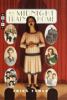
by Erika Tamar
Horn Book The orphan train takes Deirdre O'Rourke to a childless minister and his humorless wife, who feed the girl but offer her little else. A talented singer, Deirdre joins a vaudeville troupe and eventually finds her way to Texas and to her brother. His placement--a happy farm situation--would welcome her as well, but Tamar has more satisfying, if somewhat theatrical, plans for the stage-struck girl. (c) Copyright 2010. The Horn Book, Inc., a wholly owned subsidiary of Media Source, Inc. No redistribution permitted. All rights reserved. (c) Copyright The Horn Book, Inc., a wholly owned subsidiary of Media Source, Inc. No redistribution permitted. Book list Gr. 5^-7. Diedre O'Rourke, age 11, can't believe that her mother has abandoned her and her brothers to the Orphan Train, and when she's separated from the boys, she feels truly bereft. Matters don't improve when she's taken in by a minister and his wife, who are more concerned with appearing generous than actually being so. Children will feel what it was like to travel West on the train and the inhumanity of being chosen by strangers, who checked your teeth and observed your manners. The drama loses its strength, however, in the last third of the story, in which Diedre parlays her singing voice into a career with a traveling vaudeville show, finding a home of sorts with the odd assortment of stage folk. Diedre grows up much too fast, but the idea that one so young can succeed and make important personal choices has inherent child appeal. An upbeat story, though not a first purchase. --Stephanie Zvirin From Booklist, Copyright © American Library Association. Used with permission. School Library Journal Gr 5-7-Deirdre O'Rourke, 11, doesn't understand what's happening when she and her brothers, Sean and Jimmy, are bundled off on an orphan train in 1927 to find new families west of New York City. They're not orphans, but their mum says she can no longer support them. Reality sinks in when little Jimmy is chosen by a strange couple, and a furious Deirdre can't do anything to stop them. Then she ends up with Reverend Gansworthy and his stern, unaffectionate wife, who take her in only as an act of charity, and she is determined to find her brothers. Once she learns that Sean is in Texas, she runs away and joins a traveling vaudeville troupe in order to reach him. She discovers that singing is her main love in life, and that a troupe of actors can become as important a family as her brothers. Tamar does a wonderful job of incorporating the historical attitudes and realities of life for the poor during the late `20s. It's interesting to read about the ongoing tradition of orphan trains, so often connected only to the 1880s. The characters of the vaudeville troupe are convincing as a surrogate family for Deirdre, and the descriptions of her performance anxieties are real enough to appeal to any would-be performer. In spite of some inconsistencies in the protagonist's character, this book is a useful addition to the canon of orphan-train fiction.-Linda Bindner, formerly at Athens Clarke County Library, GA (c) Copyright 2010. Library Journals LLC, a wholly owned subsidiary of Media Source, Inc. No redistribution permitted. (c) Copyright Library Journals LLC, a wholly owned subsidiary of Media Source, Inc. No redistribution permitted. Publishers Weekly In this novel set during the Great Depression, Tamar (The Junkyard Dog) adds some twists to the much-explored terrain of the orphan train. As the story opens, 11-year-old Deirdre O'Rourke and her two brothers are boarding a train at New York's Grand Central Station; their mother then walks away, "stiff-legged and fast down the street, her arms wrapped tight around her body." The scene sets the book's somber tone. An aura of despair and loneliness persists as Deirdre watches her three-year-old brother go off with new parents, then is forced to abandon her 13-year-old brother when she, too, is adopted. Miserable in her new home with an austere minister and his wife, ridiculed by children for her hand-me-down clothes and viewed by adults as a ruffian, Deirdre loses her sense of dignity and identity until she hatches a plan to find her older brother. While the story line seems to be headed toward a happy reunion of the three children, fate plays an interesting trick, changing Deirdre's course. The protagonist's gift for song seems somewhat tacked on, since readers witness little of her joy of singing; as her talent plays such a crucial role in the novel's outcome, they may be left unconvinced by the final turn of events. Still, Deirdre's realization that she is in control of her destiny comes as an uplifting epiphany, adding light to a rather grim sequence of events. Ages 10-13. (May) (c) Copyright PWxyz, LLC. All rights reserved (c) Copyright PWxyz, LLC. All rights reserved Kirkus Tamar (Alphabet City Ballet, 1996, etc.) has fashioned a rich narrative around the little-known but remarkable historical phenomenon of the orphan train. The novel opens more than 150 years ago on a train leaving the poverty-stricken tenements of New York City. Three immigrant siblings: Sean the oldest at 13, Deirdre, 11, and Jimmy, 3—have been given away by their destitute, homeless mother. The Children's Aid Society gathers up the three—who, along with dozens of other "orphaned" children, board a train that stops intermittently in rural towns where they are displayed to prospective adoptive parents. Jimmy is the first to be chosen, prompting the devastating realization that they will all be separated. A well-meaning but distant reverend and his cold wife take in Deirdre, who is pegged as an outcast and a charity case within the new and unfriendly community. Terribly lonely and unhappy, she is desperate to find her brothers, so when she finally receives word from Sean, she is determined to follow him to Texas. When a vaudeville show stops in town, she recognizes her chance to get out. Within this group of talented misfits, Deirdre discovers a new kind of family and an outlet for her stunning singing voice. When the act finally arrives in Texas and she is reunited with Sean, Deirdre realizes that she must choose for herself where she belongs. A compelling journey into the past with engaging characters, this story manages to avoid sentimentality, and yet still pulls the heartstrings. (afterword) (Fiction. 8-12) Copyright ©Kirkus Reviews, used with permission. Copyright © Kirkus Reviews, used with permission. |