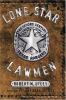
by Robert M. Utley
Publishers Weekly In this follow-up to Lone Star Justice, Utley tells how the Texas Rangers entered the 20th century as an effective if idiosyncratic law enforcement outfit and entered the 21st century as the investigative arm of the Texas Department of Public Safety. In a dry style, Utley describes the Rangers' various commanders, troopers and exploits. Through the first third of the 20th century, the Rangers operated in an extralegal fashion-their existence was at the whim of whoever occupied the governor's mansion in Austin. It wasn't until 1935 that the Rangers were made official and brought into the newly formed DPS. Utley is far too enamored of the Rangers for his book's good. While his precise if plodding prose doesn't hype the Rangers' exploits, and he acknowledges a "dark period" early in the 20th century when weak leaders failed to control their men, he treads so lightly on so many issues-prisoner treatment (brutal), racial integration (belated) and especially gender equality (a glaring problem Utley chalks up to "the lack of female applicants")-that it is hard to see this as the definitive account it aspires to be. 30 b&w illus. (Mar.) (c) Copyright PWxyz, LLC. All rights reserved (c) Copyright PWxyz, LLC. All rights reserved Kirkus A continuation of the author's Lone Star Justice (2001), bringing the tale of the renowned—and sometimes infamous—Texas Rangers to the present. Founded to battle Comanches and other Indians on the open range, the unit that ranks among the world's best-known police detachments became not very particular about its targets along about the time of the Mexican Revolution, when this sequel gathers steam. The decade of the revolution (1910–20) is, writes Utley, "the blackest period in the history of the Texas Rangers"; so vigorous were the special agents in keeping the border under Anglo control that police murders of Mexicans and Mexican-Americans were common. One Army scout reported, for instance, finding the bodies of ten Mexicans hanging alongside a road, each with a bullet in the forehead, which one former Ranger called the brand of the unit in a process known along the borderlands as "evaporation." Utley condemns the Rangers of the time for undermining rather than upholding the law, proceeding to a period in which the governor commissioned Rangers to "carry a gun and arrest law-breakers, such as editors, executives, and bankers" who dared oppose his enlightened rule. In time, conditions changed, giving credence to the thought that good politics make for good police. Usually few in number, the Rangers dwindled into the Depression, when constant bank robberies gave them new opportunities to fan their six-shooters. In the modern era, they had to adjust to conditions, admitting women into the unit (none too successfully); attending to strange confrontations with the Branch Davidians (more successfully than did federal authorities) and right-wing militias; and recruiting minority officers none too enthusiastically. On that note, it is something of an irony, given the Rangers' Latino-hating tendencies of old, that Utley considers the best of the best Rangers to have been one Manuel Gonzaullas, whom he deems an "exemplary leader." A valuable addition to the library of Texana. Copyright ©Kirkus Reviews, used with permission. Copyright © Kirkus Reviews, used with permission. |